
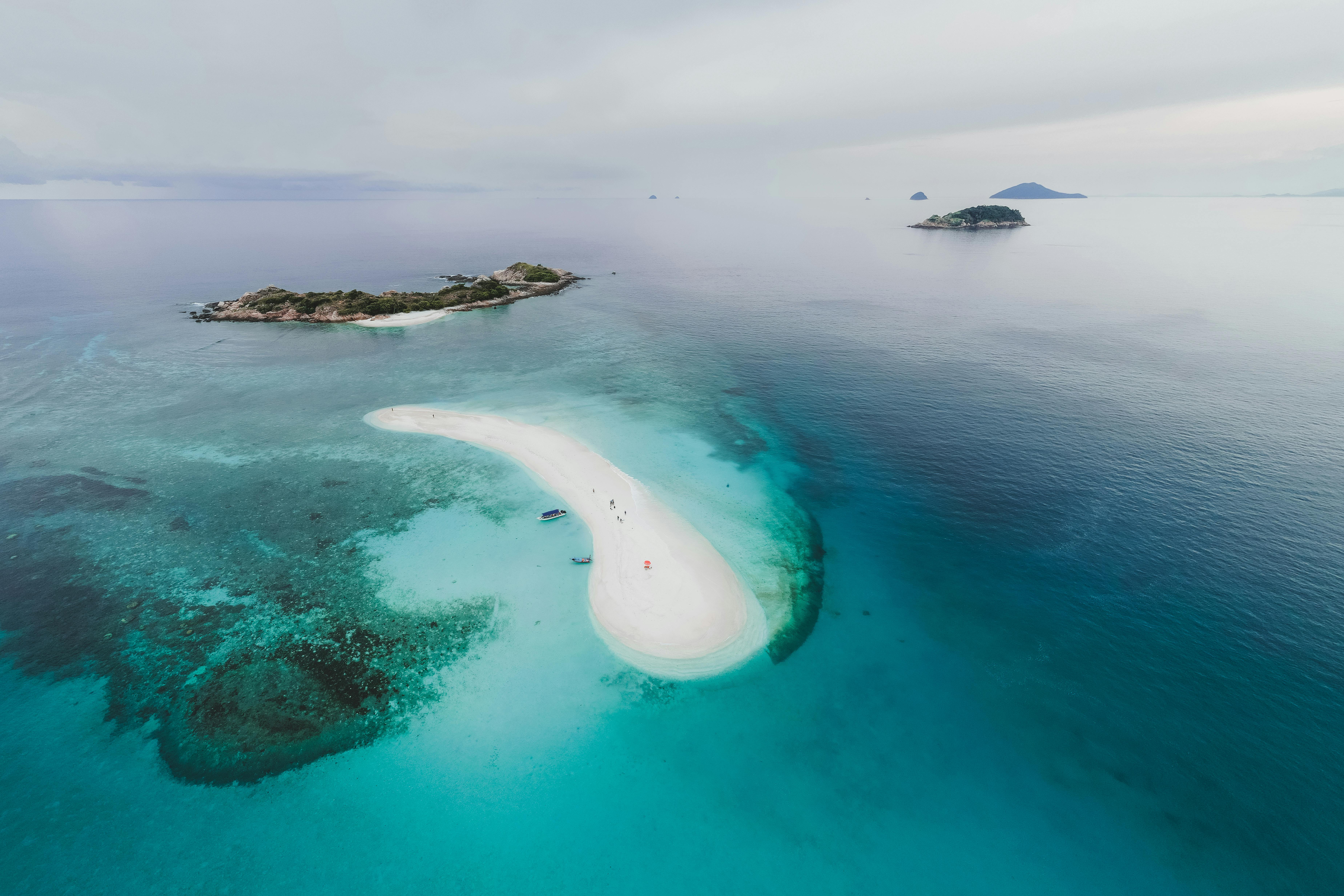
A beach that is wide in August can be reduced to shingle and rock by February. The sand has usually moved rather than disappeared, and the cycle is seasonal.
Storm waves move sand offshore
Short, steep winter waves carry more energy and break more violently, suspending sand and pulling it seaward on the backwash faster than it is pushed shore.
The material accumulates in offshore bars, which are themselves useful because they force waves to break further out and reduce the energy reaching the shore.
What is left on the beach is the coarser material that the waves could not move, which is why a summer sand beach can look like a shingle bank in winter.
Calmer swells bring it back
Longer, gentler summer waves push sand shoreward more than they drag it back, gradually rebuilding the beach from the offshore bars.
The rebuilding takes weeks rather than days, and it happens from the bottom of the beach upward, so the profile changes shape as well as size.
A beach in a stable system returns to roughly the same volume each year, and the seasonal swing is entirely normal rather than a sign of erosion.
Longshore drift moves sand along the coast
Waves arriving at an angle move material along the shore in a zigzag, which transports sand continuously in a prevailing direction.
A beach is therefore a section of a conveyor, receiving material from one direction and losing it in the other, with the balance determining its width.
Anything interrupting that flow, such as a harbour wall or a groyne, causes accumulation on one side and starvation on the other.
The supply can be cut off upstream
Much beach sand originates from rivers and from eroding cliffs, and both sources can be reduced by human intervention.
Dams trap sediment that would otherwise reach the coast, and cliff stabilisation removes material that was feeding beaches downdrift.
Where supply falls below the rate of loss, the seasonal cycle no longer returns the beach to its previous state, and the decline becomes cumulative.
What replenishment actually does
Many resorts import sand and place it on the beach before the season, which restores the width but does not change the underlying transport regime.
The imported material moves under the same forces as the original, so replenishment is a recurring commitment rather than a fix.
Beaches that hold their shape without intervention are usually those with an intact supply and a natural boundary at each end that limits alongshore loss.