
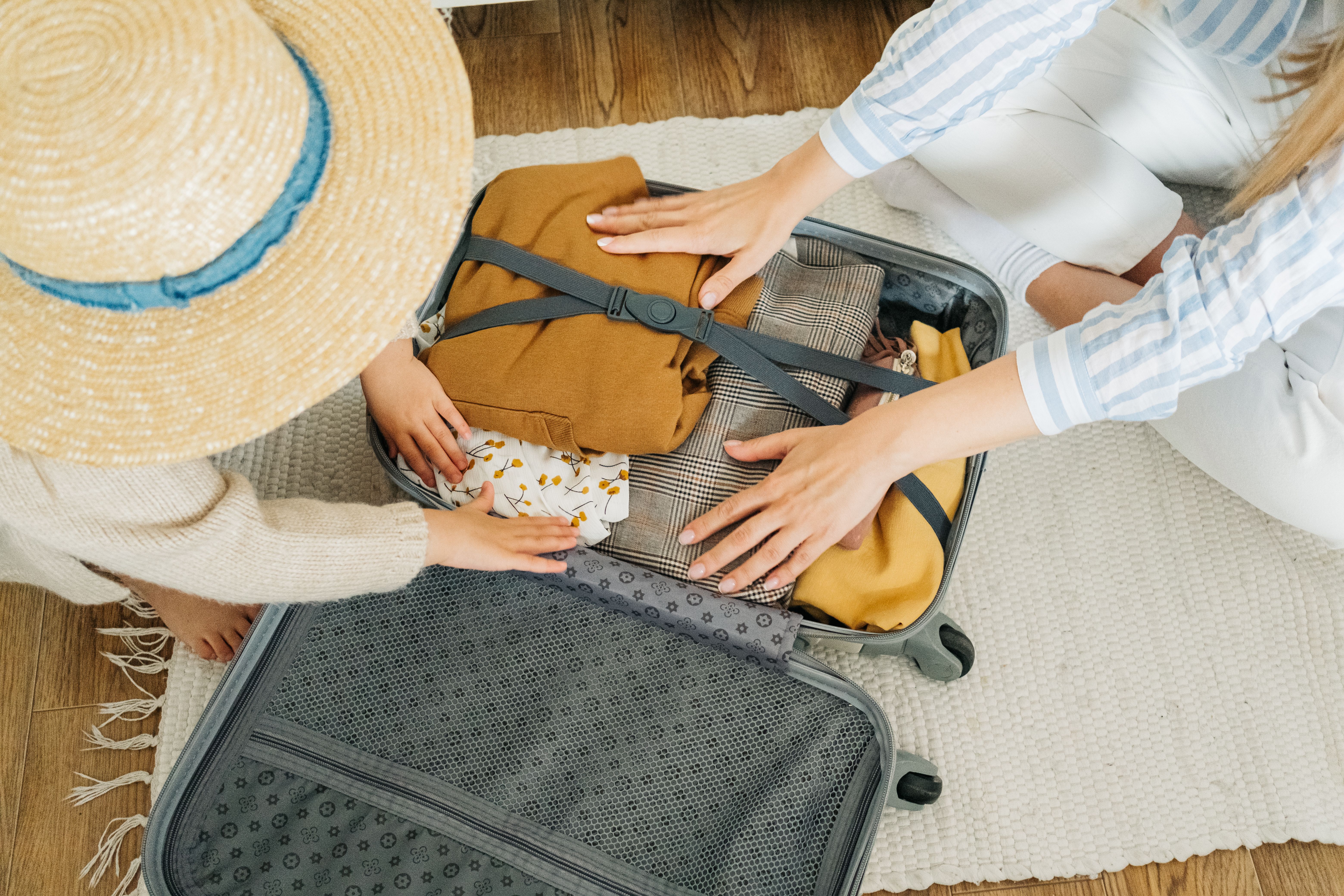
A bag that closed easily on departure frequently refuses to close on the return. The causes are mechanical and predictable rather than a failure of discipline.
Outbound packing is done under ideal conditions
Packing at home happens with the whole wardrobe visible, unlimited time, a flat surface and the ability to remove anything that does not fit.
Repacking in a hotel room happens against a checkout deadline, with items spread across several surfaces and no way to test alternatives.
The same volume of clothing therefore occupies more space on the return, simply because it was packed less carefully.
Clothes do not return to their original volume
Garments packed from a drawer are folded flat and compressed. Worn garments have creased along different lines and resist folding the same way.
Anything damp, including swimwear and walking gear, occupies more space and cannot be compressed without consequences for everything around it.
Laundry bags add a further layer, since separating clean from dirty means the packing can no longer interleave items to fill gaps.
Purchases arrive with their own packaging
Items bought while travelling come in boxes, tissue and bags designed for display rather than transport, and that packaging is mostly air.
Fragile purchases genuinely need protection, so the packaging cannot simply be discarded, and it must be replaced with clothing if it is.
Food and drink purchases are the heaviest offenders, adding weight rather than volume and pushing a bag past an allowance that space alone would not.
Allowances are checked differently on the return
Outbound flights from a home airport are often flown with a familiar carrier and a known process. A return leg may be operated by a partner with different rules.
Cabin bag size checks are applied more strictly at some airports than others, and a bag that passed unmeasured outbound may be gauged on the way back.
The fee for resolving this at the gate is set high deliberately, which makes an unexpected measurement an expensive surprise at the worst moment.
What actually prevents the problem
Leaving genuine empty space rather than a notional margin is the only reliable method, because compression on the return is not available.
A flat foldable bag weighs very little and converts an overpacking problem into a second item, which is cheaper to add than to resolve at the gate.
Weighing the bag before leaving the accommodation, rather than at the airport, preserves the option of moving heavy items into a coat or a personal item.