
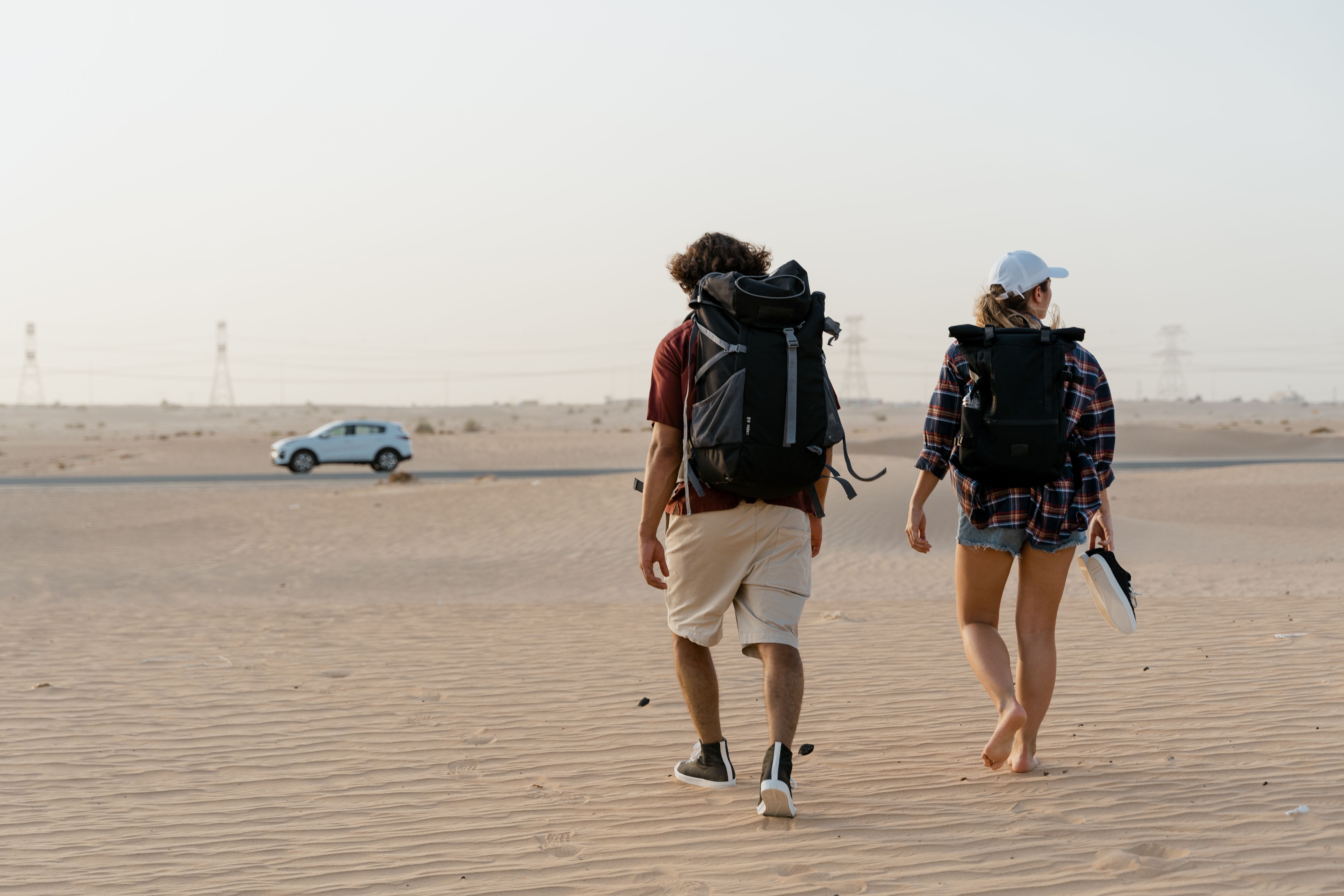
Guided parties frequently stop short of a summit in apparently good conditions. The decision follows a rule set before the party left, not a judgement made at the moment.
The turnaround time is agreed in advance
Before departure a guide fixes a time by which the party must begin descending, calculated backwards from when conditions on the route are expected to deteriorate.
That calculation includes the descent duration, a margin for a slower party and the point at which daylight or refuge access runs out.
Because it is set in advance, it is immune to the optimism that builds during a climb, which is precisely why the practice exists in that form.
Conditions deteriorate on a daily cycle
Snow that is firm at dawn softens as the sun works on it, and a slope that holds a boot at five in the morning may not hold one at eleven.
Rockfall follows the same pattern, since ice binding loose material releases as temperatures rise through the morning.
Afternoon convection builds storms in many mountain ranges with considerable reliability, which makes a late descent along an exposed ridge a materially different proposition.
Descent is where most incidents happen
Ascending is slower, more deliberate and done with fresh legs. Descending is faster, harder on the joints and performed by a party that has already been working for hours.
Fatigue degrades footwork and decision quality at exactly the point where the terrain demands both, and the two effects compound.
A guide budgeting the day is therefore protecting the descent rather than the ascent, and the summit is what gets cut when the budget runs short.
The party moves at its slowest member's pace
Rope teams travel together, so the group's speed is set by whoever is slowest on the day rather than by an average.
Guides revise their estimate continuously during the first hours, and an early section that takes longer than expected changes the whole plan.
This is why a guide may turn a party at a point that seems arbitrary: the decision is about rate of progress, not about how much distance remains.
Why arguing with the call rarely works
A guide carries professional responsibility for the party, and the qualification that permits the work is issued against demonstrated judgement of exactly this kind.
Certification schemes and their requirements differ by country and change over time, so what a given qualification covers is worth understanding before booking.
Clients who want a serious chance at a summit generally improve their odds by arriving fitter and acclimatised, since both directly affect the pace the turnaround time is measured against.